Tuesday, September 30, 2025

Susan B. Anthony

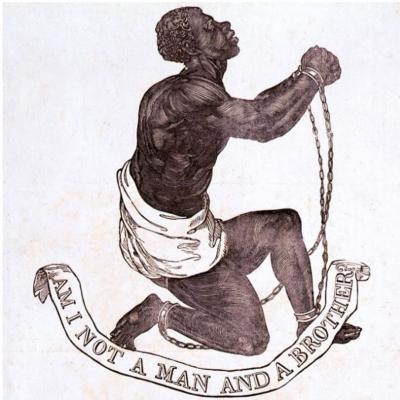
When we think of Susan B. Anthony today, we immediately picture her lifelong battle for women's suffrage. But before she became the face of the women's rights movement, Anthony was a fierce abolitionist who dedicated years to fighting the institution of slavery.

According to the National Women's History Museum, in 1856 Anthony became an agent for the American Anti-Slavery Society, traveling across New York state to deliver speeches, organize meetings, and distribute anti-slavery pamphlets. The National Park Service notes that after her family moved to Rochester, New York in 1845, they became deeply involved in the antislavery movement, with Quakers

Susan B. Anthony

meeting at their farm nearly every Sunday alongside luminaries like Frederick Douglass and William Lloyd Garrison.

Her circa 1859 speech "Make the Slave's Case Our Own" reveals the moral passion and rhetorical power she brought to this cause. In it, she challenged her audiences to truly imagine themselves in the position of the enslaved, asking them to feel "that it is our own backs that are bared to the slave driver's lash" and "our own children, that are ruthlessly torn from our yearning mother hearts."

Anthony didn't just appeal to emotions—she systematically dismantled the justifications white Americans used to rationalize slavery. She confronted the racist assumption that enslaved people were somehow different from white people and therefore could endure conditions that would be "torture worse than death" to others. With biting irony, she attacked the argument that enslaved people were better off in America than in Africa, calling it out as the moral hypocrisy it was.

Perhaps most courageously, Anthony refused to let Northern audiences off the hook. She insisted that Northerners were "bound up with the slave-holder in his guilt" through their support of the Constitution, which protected slavery and required citizens to return fugitive slaves. As GovInfo documents, Anthony helped fugitive slaves escape and held anti-slavery rallies, putting her principles into direct action.


At the heart of Anthony's anti-slavery work was a simple but radical idea: the failure to recognize the full humanity of enslaved people was what kept them in chains. This insight would later inform her women's rights activism, as she drew explicit parallels between the oppression of enslaved people and the subjugation of women. The National Susan B. Anthony Museum preserves her legacy as both an abolitionist and suffragist, showing how these struggles were interconnected in her mind.

Anthony's commitment to abolition wasn't without personal cost. She faced hostile crowds and threats during her speaking tours. Yet she persisted, driven by an unwavering moral conviction that slavery was America's greatest sin.

Understanding Anthony's abolitionist work gives us a fuller picture of her life and philosophy. She didn't see various forms of oppression as separate issues but as interconnected struggles for human dignity and equal rights. Her fight against slavery laid the groundwork for her later suffrage work, demonstrating that true equality required dismantling all systems that denied people their fundamental humanity.

AI disclosure: I used Claude AI to smooth the text of Susan B. Anthony writing's and speeches, and format it in a readable way. I then edited the ai generated text. I added photos, links, and captions.

Thursday, September 25, 2025

Video reaction

John Calhoun
 John C. Calhoun stands as one of the most controversial and influential political figures of the antebellum period, earning recognition for his unwavering commitment to defending slavery and Southern interests throughout his extensive political career. Arguing that the institution was essential to the regional economy while opposing federal interference in state affairs. His pro-slavery stance significantly contributed to the growing sectional tensions that would eventually tear the nation apart, leaving behind a complex and controversial legacy. His influence extended far beyond his lifetime, as his theories about states' rights and federal limitations continued to shape Southern political thought and resistance to federal authority well into the twentieth century, making him a pivotal figure in understanding the ideological foundations of American sectionalism.

The daily existence of enslaved people was marked by unimaginable hardship, beginning before dawn and continuing until nightfall with backbreaking labor. They were forced to survive in overcrowded, primitive shacks with dirt floors and inadequate protection from the elements, wearing minimal clothing that left them vulnerable to harsh weather conditions. 

Slave market
The antebellum slave markets, conducted openly in public squares, represented the complete dehumanization of African Americans, where families were torn apart without consideration as enslaved individuals were bought and sold like property. Despite these oppressive conditions, enslaved people maintained their cultural identity and humanity while some courageously attempted escape. 


Runaway slaves moved stealthily through the darkness, often traveling alone but sometimes finding companionship and assistance from others who recognized their shared humanity. These fugitives faced constant danger from bounty hunters and tracking dogs deployed to recapture them. 


Meanwhile, Britain's relationship with slavery evolved significantly when Somerset's case established that slavery had no legal basis in England, though the British continued participating in the international slave trade. Through the persistent efforts of abolitionists like William Wilberforce, who worked tirelessly to raise public awareness and build coalitions, Britain eventually abandoned the slave trade in 1807 and completely abolished slavery throughout its empire in 1833, finally releasing all enslaved people from bondage.


AI disclosure: After taking notes on the videos my peers made. I used Claude AI to smooth the text and format it in a readable way. I then added photos, and captions.

Thursday, September 18, 2025

Anti slavery and the election of 1860

 The 1860 presidential election represented a critical turning point in America's struggle over slavery, ultimately setting the stage for civil war and the eventual abolition of the institution. This election demonstrated how deeply the slavery question had penetrated American politics and society, making compromise increasingly impossible. Abraham Lincoln and Hannibal Hamlin were the republican candidates, and John C. Breckinridge and Joseph Lane were the democratic candidates. The 1860 election featured an unprecedented four-way race that reflected the nation's deep divisions over slavery. 

Abraham Lincoln the winner of the
1860 election         

The newly formed Republican Party emerged as the primary anti-slavery political force, nominating Abraham Lincoln of Illinois as their candidate. However, the Republican position wasn’t outright abolition of slavery.
Though many party members favored the total abolition of slavery, the party pragmatically did not call for abolition in those states that already had slavery.” The party's platform carefully distinguished between opposing slavery's expansion into new territories while acknowledging constitutional limitations
The election of 1860
results

on federal interference with slavery in existing states. 


This strategic approach aimed to attract moderate voters who opposed slavery's spread without alienating those who feared immediate abolition would be economically disruptive or constitutionally problematic. As a former Whig congressman, he had long opposed slavery's expansion westward, famously declaring that the institution should be placed "where the public mind shall rest in the belief that it is in the course of ultimate extinction." Lincoln also repeatedly stated that the federal government lacked constitutional authority to abolish slavery where it already existed. 

The Democratic Party fractured along sectional lines, with Northern Democrats nominating Stephen Douglas, who championed "popular sovereignty"  allowing territorial residents to decide slavery's fate for themselves. Southern Democrats, rejecting any compromise, nominated John Breckinridge on a platform demanding federal protection of slavery in all territories. This fragmentation ultimately worked in Lincoln's favor, allowing him to win the presidency with less than 40% of the popular vote. The election of 1860 was sure to further expose sectional differences between those, especially (but not solely) in the North, who wanted to abolish slavery and those who sought to protect the institution.” The split between Northern democrats and Southern democrats ideas on slavery gave Lincoln the presidency. 


The election of 1860 was thus pivotal not because Lincoln promised immediate abolition, but because his party's opposition to slavery's expansion was seen by Southern states as an existential threat to their way of life, leading directly to secession and civil war. Lincoln promised not to abolish slavery in existing states, but once he was elected the Southern states were threatened by him and his anti-slavery ideals. 


The presidential election of 1860 marked a decisive moment when the growing anti-slavery movement collided with America's political system, ultimately fracturing the nation and leading to civil war. What began as a political campaign ended with the dissolution of the Union and four years of devastating civil war. The anti-slavery movement had achieved political power, but at the cost of national unity. Ultimately, this election demonstrated that slavery could not be resolved through normal political processes, requiring instead the transformative experience of civil war to finally end America's "peculiar institution."


AI disclosure: After taking notes on articles regarding Anti slavery and the election of 1860. I used Claude AI to smooth the text and format it in a readable way. I then edited the ai generated text. I added photos, and captions.


Wednesday, September 17, 2025

The values of free expression

Promote tolerance is the idea that freedom of speech, more specifically hate speech, or speech we find personally upsetting, makes us more tolerant to other ideas. When we listen, and more importantly understand what other people believe, we become more tolerant. A more tolerant society is better as we become more accepting of others who aren’t exactly like us. It’s important to live in a world where we have the freedom to express our own opinions even if they are negative or hateful towards our government. This is how we learn to accept others by listening to others' ideas. 

Recently Charlie Kirk, a right wing political activist, was shot and killed on a college campus while debating students. He went around to different college campuses and would have college students come up and try to change his ideas on politics, while also trying to convince them of his ideas. It is good to debate and to make these college kids think about why they truly support what they support. Charlie was promoting tolerance, he would sit and listen to other people's ideas as well as share his ideas with  

Charlie Kirk at a debate
college students while they tried to change each other's minds. 

I think Charlie going around sharing his ideas and listening to others was exactly what we should be doing, debating, and hearing other people out. Everyone has the first amendment right to speak freely, and believe what they want to believe in. Kirk “believed in the potential and promise of young people,” she said. “He inspired millions of them to get involved in politics and fight for our nation’s conservative values.” He believed in tolerance, he wanted young kids to get involved in politics and debate.   

Promote tolerance allows for diversity in our society, we all have our own beliefs and opinions, and even if they are similar to others they aren’t exactly the same. Not only should we be tolerant of other people's political ideas, but we should be tolerant of other people's cultures. “Tolerance is about opening your heart to accept others as they are even if they don’t look like you, act like you, have the same values and beliefs as you, and yes, even when they upset and annoy you.” 


Tolerance is something our society has been struggling with since the beginning of time. From slavery, to segregation, and jim crow laws, our society is always striving to be more tolerant, even today. We need to be more tolerant of our people and their ideas. People should be able to express their beliefs and not get murdered for that, or hurt for just being themselves. 


Tolerance is very important in our society today, we need to be able to accept others even if they look different, or believe different things than us. Not everything has a right and a wrong, some things are just opinions, and just because someone has a different opinion than you doesn’t mean they're wrong. The government doesn’t need to get involved if we learn to tolerate each other and our ideas. We want a marketplace of ideas, where the government doesn’t have to get involved but we can’t have that unless we are tolerant of each other. With a marketplace of ideas we can find the best ideas and thrive together as a society.

Tuesday, September 9, 2025

Slavery in the Bible

The Bible’s relationship to slavery is complex and deeply tied to the historical and cultural contexts in which its texts were written. While the Bible does not explicitly endorse slavery as a moral good, it does contain numerous passages that regulate and acknowledge the practice leading some throughout history to interpret these as tacit support. 

Slavery in Israel

The Bible teaches that all human beings are equal because they are made in the image of God, making judgment based on appearance unbiblical. Slavery existed before the Bible, and the Bible neither started nor ended slavery. However, the form of slavery described in the Bible differs significantly from the slavery practiced in the United States. For instance, in biblical times, a Hebrew individual could voluntarily sell themselves into servitude due to financial hardship. 

The Bible explicitly condemns kidnapping and selling people, as seen in Exodus 21:16, which prescribes death for such acts. The New Testament also addresses slavery, urging slave owners to treat slaves with respect, reminding them that both masters and slaves have the same Master in heaven who shows no partiality (Ephesians 6:9). The Mosaic Law was not intended to justify slavery but rather to regulate and improve a flawed social system by granting rights to slaves and servants that were not previously recognized. Under biblical law, slaves had certain rights, such as the right to marry (Exodus 21:3), the right to food and clothing (Exodus 21:10), and protection against excessive punishment (Exodus 21:20, 26–27). These laws sought to humanize the treatment of slaves in contrast to the absolute lack of rights slaves had in other systems. Thus, while the Bible acknowledges slavery’s existence, it sets guidelines aimed at fairness and dignity within that context.     

 Has the church followed the Bible on slavery? | Psephizo


Throughout much of the Bible, slavery is treated as a normalized institution, and in several passages, it appears to be divinely sanctioned. Under the Law of Moses, God permitted the Israelites to take slaves from conquered nations and hold them permanently (Leviticus 25:44–46), while fellow Israelites could sell themselves into temporary servitude to repay debts (Exodus 21:2). These laws were not framed as moral condemnations but as practical regulations, and in some cases, owning slaves was even portrayed as a sign of divine favor and prosperity. But slavery is viewed positively in Scripture well beyond these commands. Owning slaves was seen as a sign of God’s blessing.”  However, Christian views on slavery have undergone a dramatic transformation over the past 150–200 years. 

While early Christian thinkers like Saint Augustine acknowledged slavery as a consequence of sin, it wasn’t until the 18th and 19th centuries that abolitionist movements, many led by devout Christians began to challenge the morality of slavery itself. This shift was largely influenced by changing societal values and growing recognition of human rights. As secular governments began to outlaw slavery, Christian denominations increasingly reinterpreted biblical texts to emphasize themes of justice, equality, and liberation. Today, most Christian groups reject slavery outright, viewing past endorsements as reflections of historical context rather than divine approval. The evolution of Christian thought on slavery underscores how religious interpretation often mirrors broader cultural and ethical developments. While the bible doesn’t outright say that slavery is right, it also doesn’t outright say that slavery is wrong. There are many parts of the bible, in the new and old testament, that could be used to support or to challenge the ideas of slavery.

Slavery in the Bible is a reflection of its historical context rather than a timeless moral directive. Across both the Old and New Testaments, slavery is acknowledged, regulated, and at times portrayed as divinely permitted, especially in laws allowing Israelites to enslave foreigners or sell themselves into servitude. Yet the Bible also contains powerful themes of liberation, justice, and human dignity that have inspired abolitionist movements and modern reinterpretations. Over the last two centuries, Christian perspectives on slavery have shifted dramatically, aligning more with contemporary understandings of human rights and equality. Ultimately, the Bible’s treatment of slavery reveals the tension between cultural norms and spiritual ideals.

AI disclosure: After taking notes on articles regarding slavery in the bible. I used Microsoft copilot to smooth the text and format it in a readable way. I then edited the ai generated text. I added photos, captions, and I expanded on the ai generated text by adding some of my personal thoughts and 
opinions.

Thursday, September 4, 2025

Supreme Court Reflection

                                        The Supreme Court of The United States of America

The United States Supreme Court stands as the most powerful judicial body in the world. Its authority doesn’t come from enforcement or military might, it comes from the trust and faith of the American people. This trust has been earned over centuries through careful interpretation of the Constitution and consistent dedication to justice.


One of the Court’s most significant powers is judicial review, the ability to strike down laws deemed unconstitutional. This power was first asserted under Chief Justice John Marshall in Marbury v. Madison, a landmark case that helped establish the Court as a co-equal branch of government. I know that without Marshall, and the power of judicial review our courts wouldn't have the power that they have today. Marshall’s leadership was pivotal in gaining public respect for the judiciary, transforming it from a relatively weak institution into a cornerstone of American democracy.

Despite its strength, the Court has faced setbacks. The infamous Dred Scott decision, which denied citizenship to African Americans, severely damaged its credibility for years. However, the Court has also played a vital role in expanding civil rights, especially through the interpretation of the 14th Amendment is often referred to as the “Second Bill of Rights.”

The Court is composed of nine Justices, each confirmed by the Senate. Over 100 individuals have served on the bench, with most serving for more than 16 years. Once appointed, Justices are insulated from public influence, allowing them to make decisions based solely on legal reasoning rather than political pressure.

Each year, the Court receives around 7,000 petitions. Every case is given equal consideration, though only a small fraction are heard. I think it's very impressive that the supreme court finds the time to consider each and every case. When a case is accepted, oral arguments are held publicly, with each lawyer given 30 minutes to present their side. Afterward, the Justices deliberate privately and vote. One Justice is assigned to write the majority opinion, which is revised multiple times to ensure clarity and fairness.

Ultimately, the Supreme Court’s power lies not in its rulings alone, but in the trust it has earned from the American people. That trust is what allows it to shape the law and the nation for generations.


AI disclosure: After taking notes while watching a Supreme Court video. I used Microsoft copilot to smooth the text and format it in a readable way. I then edited the ai generated text. I added photos, captions, and I expanded on the ai generated text by adding some of my personal thoughts and opinions.