The Bible’s relationship to slavery is complex and deeply tied to the historical and cultural contexts in which its texts were written. While the Bible does not explicitly endorse slavery as a moral good, it does contain numerous passages that regulate and acknowledge the practice leading some throughout history to interpret these as tacit support.
 |
| Slavery in Israel |
The Bible teaches that all human beings are equal because they are made in the image of God, making judgment based on appearance unbiblical. Slavery existed before the Bible, and the Bible neither started nor ended slavery. However, the form of slavery described in the Bible differs significantly from the slavery practiced in the United States. For instance, in biblical times, a Hebrew individual could voluntarily sell themselves into servitude due to financial hardship.
The Bible explicitly condemns kidnapping and selling people, as seen in Exodus 21:16, which prescribes death for such acts. The New Testament also addresses slavery, urging slave owners to treat slaves with respect, reminding them that both masters and slaves have the same Master in heaven who shows no partiality (Ephesians 6:9). The Mosaic Law was not intended to justify slavery but rather to regulate and improve a flawed social system by granting rights to slaves and servants that were not previously recognized. Under biblical law, slaves had certain rights, such as the right to marry (Exodus 21:3), the right to food and clothing (Exodus 21:10), and protection against excessive punishment (Exodus 21:20, 26–27). These laws sought to humanize the treatment of slaves in contrast to the absolute lack of rights slaves had in other systems. Thus, while the Bible acknowledges slavery’s existence, it sets guidelines aimed at fairness and dignity within that context.
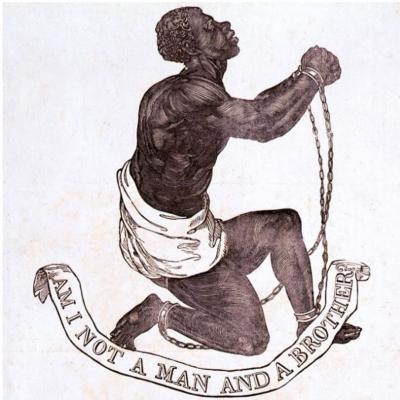
Throughout much of the Bible, slavery is treated as a normalized institution, and in several passages, it appears to be divinely sanctioned. Under the Law of Moses, God permitted the Israelites to take slaves from conquered nations and hold them permanently (Leviticus 25:44–46), while fellow Israelites could sell themselves into temporary servitude to repay debts (Exodus 21:2). These laws were not framed as moral condemnations but as practical regulations, and in some cases, owning slaves was even portrayed as a sign of divine favor and prosperity. “But slavery is viewed positively in Scripture well beyond these commands. Owning slaves was seen as a sign of God’s blessing.” However, Christian views on slavery have undergone a dramatic transformation over the past 150–200 years.
While early Christian thinkers like Saint Augustine acknowledged slavery as a consequence of sin, it wasn’t until the 18th and 19th centuries that abolitionist movements, many led by devout Christians began to challenge the morality of slavery itself. This shift was largely influenced by changing societal values and growing recognition of human rights. As secular governments began to outlaw slavery, Christian denominations increasingly reinterpreted biblical texts to emphasize themes of justice, equality, and liberation. Today, most Christian groups reject slavery outright, viewing past endorsements as reflections of historical context rather than divine approval. The evolution of Christian thought on slavery underscores how religious interpretation often mirrors broader cultural and ethical developments. While the bible doesn’t outright say that slavery is right, it also doesn’t outright say that slavery is wrong. There are many parts of the bible, in the new and old testament, that could be used to support or to challenge the ideas of slavery.
Slavery in the Bible is a reflection of its historical context rather than a timeless moral directive. Across both the Old and New Testaments, slavery is acknowledged, regulated, and at times portrayed as divinely permitted, especially in laws allowing Israelites to enslave foreigners or sell themselves into servitude. Yet the Bible also contains powerful themes of liberation, justice, and human dignity that have inspired abolitionist movements and modern reinterpretations. Over the last two centuries, Christian perspectives on slavery have shifted dramatically, aligning more with contemporary understandings of human rights and equality. Ultimately, the Bible’s treatment of slavery reveals the tension between cultural norms and spiritual ideals.

No comments:
Post a Comment